Microsoft Outlook is more than an email client—it’s a central communication and productivity platform used by businesses across the United States. It helps professionals manage email, calendars, contacts, tasks, and secure communication workflows in one place. For anyone pursuing an online cyber security job ready program or IT career path, understanding how Microsoft Outlook works is essential because it sits at the intersection of communication, security, and enterprise operations.
From small startups in Austin to large corporations in New York City, Outlook is widely used to manage sensitive business communications. Knowing how to use it effectively isn’t just a basic office skill—it’s part of being job-ready in IT and cybersecurity roles.
What Is Microsoft Outlook? A Simple Definition
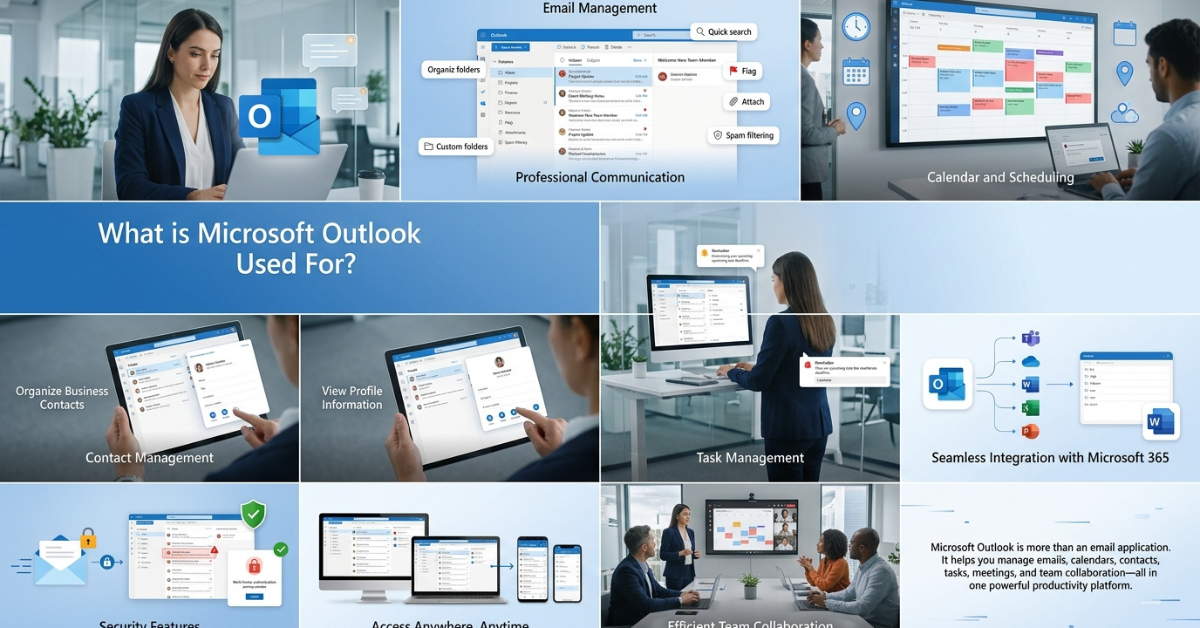
Microsoft Outlook is a personal information manager included in Microsoft 365. It combines:
- Email management
- Calendar scheduling
- Contact organization
- Task tracking
- Secure communication tools
It is used on desktops, web browsers, and mobile devices, making it a flexible tool for both remote and in-office work environments.
Core Uses of Microsoft Outlook in the Workplace
1. Professional Email Management
Outlook allows users to send, receive, and organize emails efficiently. Key capabilities include:
- Folders and rules for automated sorting
- Spam filtering and phishing detection
- Email encryption for secure communication
- Integration with enterprise email servers like Microsoft Exchange
In cybersecurity contexts, email is one of the most common entry points for attacks. Understanding how Outlook filters threats and handles suspicious emails is a critical skill.
2. Calendar and Scheduling
Outlook’s calendar helps teams coordinate meetings across time zones—important for companies operating in cities like San Francisco, Chicago, and Seattle.
Features include:
- Meeting invites with RSVP tracking
- Shared team calendars
- Time zone adjustments
- Integration with Teams and Zoom
This scheduling capability supports collaboration and project management.
3. Contact and Relationship Management
Outlook stores detailed contact information, which helps professionals:
- Track communication history
- Group contacts by department or project
- Sync with CRM systems
This feature is especially useful in IT support and administrative roles where communication tracking matters.
4. Task and Workflow Management
Users can create tasks, set deadlines, and track progress within Outlook. It integrates with Microsoft To Do and Planner, providing a lightweight project management solution.
5. Security and Compliance Tools
One of Outlook’s most important roles—especially relevant to cybersecurity—is its built-in security features:
- Data loss prevention (DLP)
- Multi-factor authentication support
- Email encryption
- Threat protection against phishing and malware
According to Microsoft security reports published in recent years, phishing remains a leading cyber threat vector, and enterprise email platforms like Outlook play a critical role in detection and prevention.
Why Outlook Skills Matter for Cybersecurity Careers
If you’re enrolled in or considering an online cyber security job ready program, Outlook knowledge is more relevant than it may seem.
Email Is a Primary Attack Surface
Cyber threats often begin with email:
- Phishing scams
- Malicious attachments
- Social engineering attacks
Security professionals must understand how these threats appear inside tools like Outlook.
Real-World Example
A cybersecurity analyst in Boston might investigate a phishing attempt reported through Outlook. They would:
- Analyze the email headers
- Identify malicious links
- Assess user behavior
- Recommend preventive measures
This shows how Outlook is not just a communication tool—it’s part of the security ecosystem.
Microsoft Outlook vs Other Email Platforms
| Feature | Microsoft Outlook | Gmail (Google Workspace) | Apple Mail |
| Enterprise integration | Strong (Microsoft 365) | Strong (Google apps) | Limited |
| Security controls | Advanced | Advanced | Basic |
| Calendar functionality | Integrated deeply | Integrated | Moderate |
| Offline access | Yes | Limited | Yes |
| IT admin control | Extensive | Moderate | Minimal |
Outlook stands out in enterprise environments where security, compliance, and administrative control are priorities.
How Outlook Training Fits into Career Development
Beginner Level
- Learn email basics
- Understand folders, rules, and organization
- Practice calendar scheduling
Intermediate Level
- Use automation rules
- Collaborate through shared calendars
- Manage tasks and workflows
Advanced Level (Relevant for Cybersecurity)
- Understand email headers and metadata
- Recognize phishing indicators
- Apply encryption and compliance policies
Training providers like Logitrain IT Training Online often include Outlook fundamentals as part of broader IT and cybersecurity readiness because these skills are used daily in real job environments.
How to Choose the Right Outlook Training Path
When selecting training or self-study resources, consider:
1. Your Career Goal
- IT support roles require strong email and calendar management
- Cybersecurity roles require deeper understanding of email threats
2. Learning Format
- Self-paced online modules
- Instructor-led virtual sessions
- Hands-on labs
3. Integration with Other Skills
Outlook training is most valuable when combined with:
- Microsoft 365 administration
- Networking basics
- Security awareness training
Common Mistakes to Avoid When Learning Outlook
- Treating it as “just email” instead of a business system
- Ignoring security features and settings
- Not learning keyboard shortcuts and productivity tools
- Skipping mobile and cloud-based usage scenarios
- Failing to understand integration with Teams and SharePoint
Avoiding these mistakes helps you use Outlook more effectively in professional environments.
Frequently Asked Questions
1. What is Microsoft Outlook mainly used for?
It is primarily used for managing email, calendars, contacts, tasks, and secure communication within organizations.
2. Is Outlook important for cybersecurity jobs?
Yes. Email is a major attack vector, and security professionals frequently analyze threats within platforms like Outlook.
3. Can beginners learn Outlook easily?
Yes. Basic functions are simple, but advanced features require practice, especially for IT roles.
4. Is Outlook still widely used in the United States?
Yes. Many organizations across industries rely on Outlook as part of Microsoft 365.
5. How long does it take to learn Outlook?
Basic skills can be learned in a few days, while advanced, job-ready proficiency may take several weeks.
6. Does Outlook work on mobile devices?
Yes. Outlook has mobile apps for iOS and Android, supporting remote work and on-the-go access.
Conclusion
Microsoft Outlook plays a foundational role in how modern businesses communicate, organize, and secure their operations. While it may seem like a basic office tool, its real-world importance—especially in cybersecurity and IT roles—makes it a valuable skill for anyone entering the workforce.
If your goal is to become job-ready in IT or cybersecurity, don’t overlook Outlook. Mastering it helps you understand communication systems, recognize security risks, and operate effectively in real business environments. Start with the basics, build practical skills, and connect your knowledge to broader IT systems.