
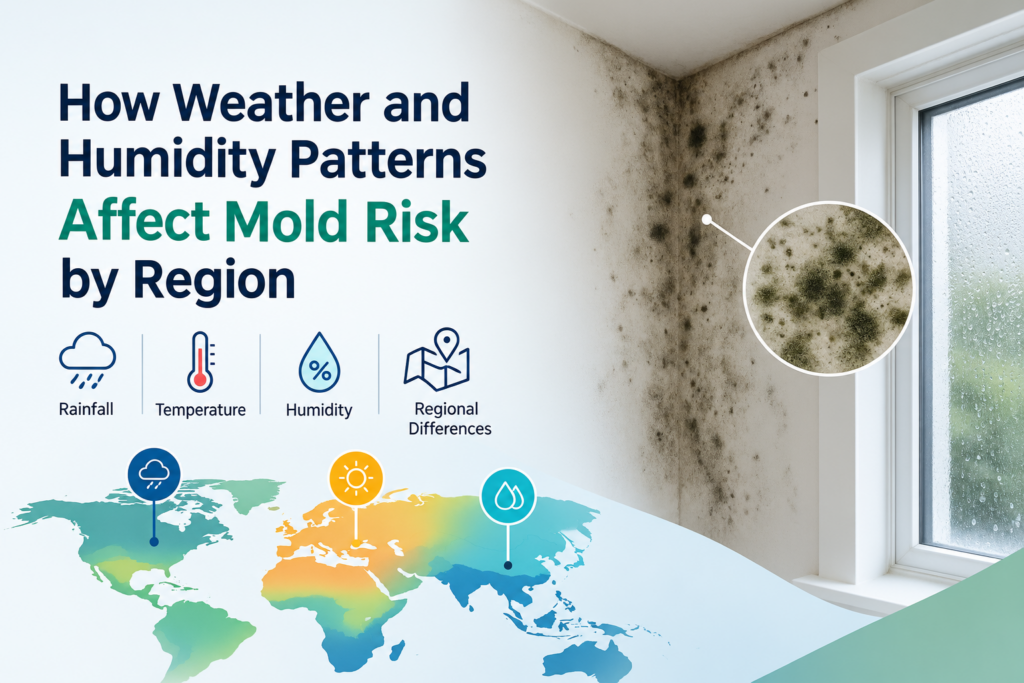
Mold doesn’t show up randomly. It grows where conditions favor it, and those conditions vary a lot depending on where you live. A home inspection Los Angeles professionals perform will focus on very different risk factors than an inspection done in a humid Midwest city, simply because the climate itself plays such a big role in whether mold has a chance to take hold.

Understanding how weather and humidity shape mold risk can help homeowners across different regions know what to watch for, and why the same house might behave completely differently depending on where it’s built.
Why Humidity Is the Main Driver
Mold needs moisture to grow, and humidity is one of the biggest sources of that moisture, even without an obvious leak or flood. When humidity levels stay high for extended periods, materials like drywall, wood, and insulation can absorb enough moisture from the air alone to support mold growth, especially in areas with poor ventilation.
This is why regions with naturally high humidity tend to see more mold related issues overall, even in homes that are well built and well maintained. It’s simply a matter of the air itself carrying more moisture for materials to soak up.
Dry Climates Aren’t Immune
It’s a common misconception that dry climates don’t need to worry about mold. Southern California, for example, has a relatively dry climate overall, but that doesn’t mean homes there are risk free. Coastal areas within the region still deal with higher humidity than inland neighborhoods, and issues like plumbing leaks, poor bathroom ventilation, or roof damage can create localized moisture problems regardless of the overall climate outside.
A home inspection los angeles buyers rely on will often focus on specific trouble spots like bathrooms, under sink areas, and attic spaces, since these are the places where moisture tends to get trapped even in a generally dry region.
Humid Climates Face a Different Set of Challenges
Cities with consistently high humidity, especially those with hot, muggy summers, deal with mold risk on a much broader scale. It’s a good comparison to look at a mold inspection Chicago homeowners might schedule, since the Midwest deals with a combination of humid summers and cold, damp winters that create ideal mold conditions almost year round.
In climates like this, basements and crawl spaces are particularly vulnerable. Cold surfaces meeting warm, humid air create condensation, and that condensation is often enough moisture on its own to support mold growth over time, even without any actual water leak involved. Homes in these regions often need more aggressive dehumidification and ventilation strategies just to keep mold in check.
Coastal Regions and Salt Air Humidity
Coastal cities anywhere in the country tend to deal with elevated humidity levels compared to inland areas at similar latitudes. The ocean adds moisture to the air, and that moisture settles into homes in ways that aren’t always obvious. Wood framing, insulation, and even furniture can hold onto that extra humidity, creating conditions that support mold growth in places that would otherwise stay dry.
Seasonal Shifts Matter Too
It’s not just the overall climate of a region that matters. Seasonal changes can create short windows where mold risk spikes even in areas that are dry most of the year. Rainy seasons, spring thaws, and periods of high humidity following storms can all create temporary conditions that are ripe for mold growth, especially if a home doesn’t dry out properly afterward.
This is why timing matters when it comes to mold inspections. A home that looks completely fine during a dry season might be hiding early signs of a problem that only becomes visible after a particularly wet or humid stretch of weather.
What Homeowners Can Do Regardless of Region
No matter where you live, a few habits help reduce mold risk significantly.
- Keep indoor humidity levels between thirty and fifty percent using a dehumidifier if needed.
- Make sure bathrooms, kitchens, and laundry areas have working exhaust fans that vent outside rather than into an attic.
- Address any leaks or water damage quickly, since mold can start growing within just a day or two of sustained moisture exposure.
- Schedule a mold inspection if you notice a musty smell, visible discoloration, or a history of water issues in the home.
The Bottom Line
Where you live has a real impact on your home’s mold risk, but no climate is completely immune. Dry regions still have moisture prone areas that need attention, and humid regions require more consistent maintenance to keep mold from becoming a recurring problem. Understanding your local climate, and paying attention to the specific trouble spots that come with it, is one of the best ways to stay ahead of a mold issue before it turns into a bigger and more expensive problem.